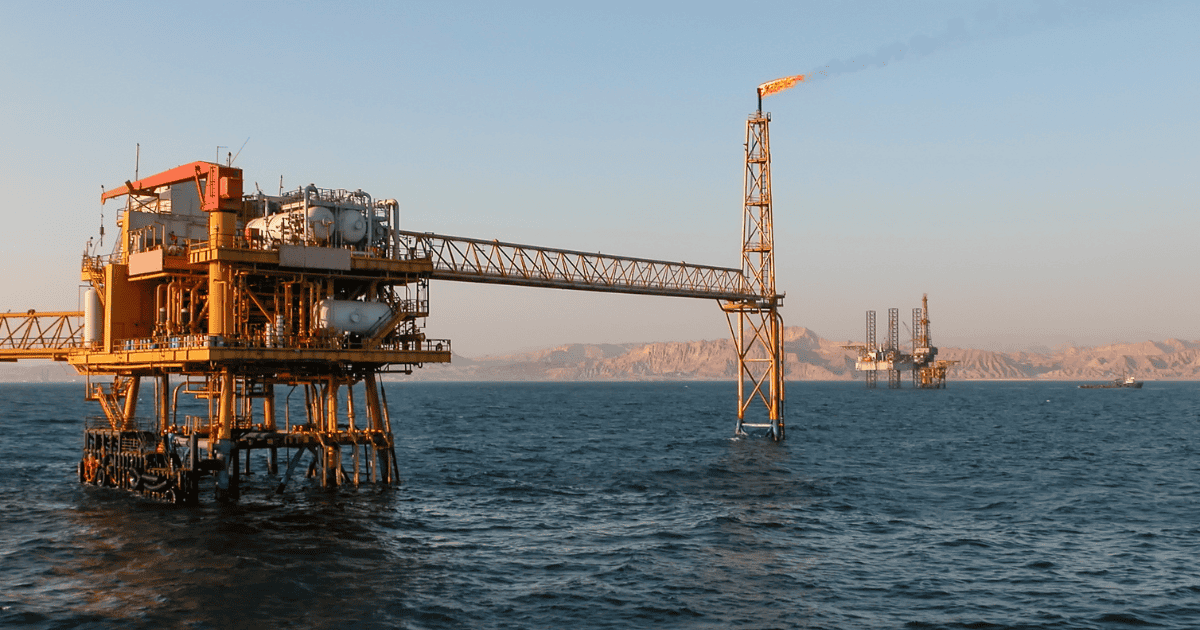
Detection at sea is a whole new challenge; ports, offshore platforms, LNG terminals and marine logistics infrastructure are all expanding globally due to supply chain demand. This has led to increased automation, so fewer personnel are needed permanently on site, meaning remote monitoring is swiftly replacing human patrols.
Yet fire and intrusion risks still exist and now face longer response times in offshore environments. Asset owners are now facing a complex problem; traditional fire detection standards have centred around land-based infrastructure and require maintenance that isn’t feasible in a constantly operating marine environment. So, what can they do to ensure reliable coverage?
In this blog we aim to provide the answer and explore the next frontier for distributed detection.
The industry turns toward AI and vision-based detection
In response to traditional solutions failing, we’re seeing the growing adoption of AI camera monitoring in the maritime sector for smoke or flame detection, situational awareness and security. Whilst beneficial, as it allows remote observation, the solution works best in controlled environments with a clear line of sight and consistent contrast at all times. These systems detect threats by interpreting visual patterns, which is ideal for lower-risk environments but less effective for marine environments with constant visual interference. Lighting conditions change rapidly, smoke disperses differently in open windy environments, and enclosed spaces are often completely dark. AI improves the interpretation of threats in these spaces but still can’t detect what isn’t visible. This means visual detection is still reactive instead of preventative.
Why marine environments break traditional detection assumptions
Movement and vibration
Marine environments are anything but still. Engines, turbines, pumps and loading equipment generate continuous vibration, whilst wave motion causes structural movement across assets. Even temperature variation can cause equipment expansion and contraction, so sensors relying on stability or alignment can drift or misinterpret signals.
Salt, moisture, and corrosion
Infrastructure on or near the sea is constantly battling salt build-ups on site. These salt deposits can accumulate on lenses and camera housings, causing accelerated corrosion compared to inland installations. Regular cleaning is difficult in offshore environments or high-mounted areas, so the electrical components in cameras degrade faster, leaving gaps in the detection system.
Visibility challenges
Due to volatile weather conditions, fog, spray and humidity can obscure optical systems, along with exhaust gases and steam from machinery or dust clouds from cargo handling. Most concerning, however, is the dilution of smoke from airflow, meaning smoke won’t meet ceiling-level detectors.
Confined and concealed spaces
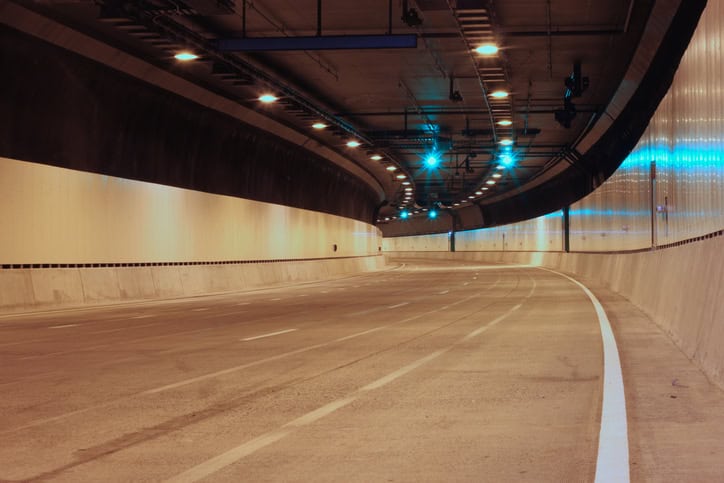
The complex infrastructure in marine environments means cable trays, conveyors, ducts and tunnels can be hidden from view. But fires frequently begin in the machinery or wiring of these components. Point detectors such as cameras can’t cover these long linear assets continuously, and maintenance staff are rarely present, so problems that arise go undetected.
A different approach with continuous distributed detection
Fiber optic distributed sensing detects minute physical changes directly instead of detecting smoke or flames. The system analyses temperature rises as an indicator of fire and acoustic disturbances to indicate intrusion or mechanical anomalies. Distributed sensing allows operators to measure the entire asset length, eliminating gaps between point detectors. In marine environments it’s particularly effective, as there’s no reliance on airflow, visibility or lighting, so detection becomes preventative rather than reactive. By continuously monitoring the entire asset, fire or security teams can intervene earlier to prevent catastrophic damage and losses.
Why fiber optic distributed sensing fits marine conditions
In a distributed sensing system, the fiber optic cable acts as a continuous sensor along kilometres of infrastructure. It’s a passive sensing element with no power required in the field, making it immune to electromagnetic interference from heavy equipment. The complexity of marine environments is ideal for fiber optic sensing, as the cable remains unaffected by darkness, low visibility, corrosion, moisture and confined spaces. Distributed sensing is an incredibly cost-effective solution, as it requires minimal maintenance compared to cameras, which need regular cleaning, or detectors that deteriorate.
Whether in use on long perimeters, tunnels, conveyors, cable routes or jetties, the fiber provides real-time location data of the event, passing information to central control rooms where teams can remotely monitor the asset. This allows marine environments to run a reliable sensing system with reduced on-site personnel.
Rethinking detection strategy for future maritime infrastructure
Increasingly automated ports and offshore facilities reduce human supervision, so systems must improve to operate autonomously. A layered approach to threat detection is becoming an industry expectation to meet this need. Distributed sensing forms a reliable baseline for continuous monitoring, with additional measures such as CCTV, suppression systems and AI interpretation forming a second layer to enhance safety and security.
On the whole this supports faster response planning and targeted intervention to align with growing regulatory focus and resilience. This improves safety and efficiency across the sector, avoiding shutdowns, environmental damage and evacuation events.
The next frontier isn’t smarter cameras, it’s smarter measurement
The main challenge in marine environments is environmental reliability, not detection intelligence. Visual systems interpret events after they appear, or due to environmental interference, not at all, whereas distributed sensing identifies physical changes at the earliest possible moment. Marine infrastructure demands this level of detection efficiency from systems designed around physical changes, not visibility. Now is the time for marine asset owners and security or fire solution providers to think for the future, using protection strategies that prioritise continuous monitoring across entire assets. We can improve offshore safety, but we need measurement-based, reliable detection to do so.
Support the future of threat detection. Join our global network of partners to provide effective fire and intrusion detection systems across marine and offshore environments: https://www.bandweaver.com/about-bandweaver/partners/