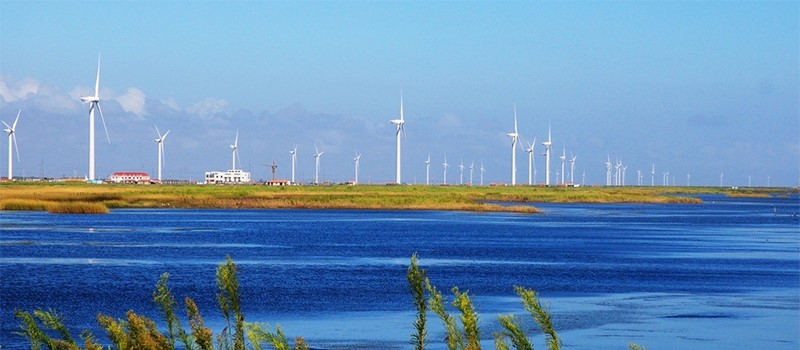
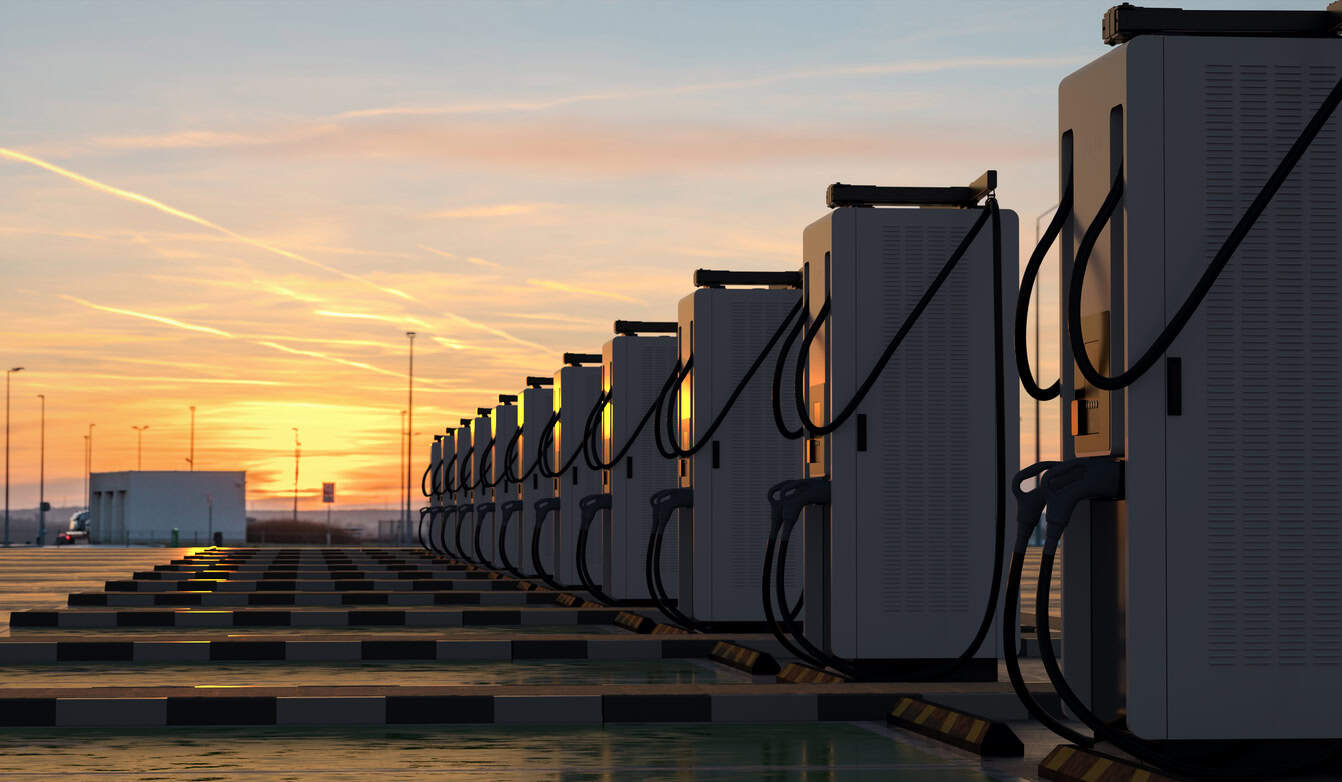
Electrification is accelerating across modern infrastructure. From EV charging networks and Battery Energy Storage Systems (BESS) to electrified rail and large-scale solar PV installations, these systems are reshaping how energy is generated, distributed, and consumed.
They are often positioned as cleaner, more efficient, and more sustainable alternatives but as infrastructure evolves, so too does the nature of risk.
Electrification does not eliminate fire risk, it changes it into a whole new challenge.
Rising thermal risk in electrified assets
Electrified systems operate under completely different conditions compared to traditional infrastructure. Higher energy densities, continuous electrical loads, and tightly integrated components all contribute to increased thermal stress across the system.
Across EV charging, battery storage, rail, and PV installations, there are multiple points where faults can develop. Connection issues, insulation degradation, mechanical damage, or component failure can all lead to localised heat build-up. In many cases, these systems are installed in confined or high-temperature environments, where heat can accumulate without immediate visibility.
At the same time, infrastructure is becoming more distributed. Assets are often spread across wide areas, remotely located, or unmanned, reducing the opportunity for manual inspection or intervention. The result is a growing number of thermal vulnerability points, where faults can develop gradually and remain undetected until they reach a critical stage.
Fire starts with heat, not flames
In electrified infrastructure, fire rarely begins with a visible event. It begins with heat.
Most incidents follow a consistent pattern: an underlying fault develops, leading to increased resistance or energy imbalance. This generates localised heating, which, if it continues, leads to further degradation and eventually a fire igniting.
In battery systems, particularly lithium-ion, this evolving threat is well understood. Thermal runaway doesn’t happen instantly; it’s preceded by measurable temperature changes that indicate instability within the system. This makes heat the earliest and most reliable indicator that something is going wrong. By the time smoke or flame is detected, the failure process is already well underway, and the opportunity for early intervention may have passed.
The limitations of traditional detection
Conventional fire detection systems are designed to identify the end result of combustion, not the conditions and symptoms that lead to it.
Smoke detection relies on a fire already taking place, meaning the system is already running delayed behind the threat growing. In open or ventilated environments, smoke may disperse or behave unpredictably, further reducing detection reliability.
Flame detection and camera-based systems depend on visible cues. Lighting conditions, occlusion, and environmental factors, particularly in complex or enclosed spaces, can influence their effectiveness.
Point-based sensors provide only localised coverage and rely on correct placement, this creates gaps where early-stage overheating can develop unnoticed.
Even periodic inspection methods, while still important for safety, cannot provide continuous visibility and are unable to capture fast-moving or rapidly developing faults.
In each case, the limitation is the same. These systems react to events that have already developed, rather than identifying the conditions that lead to them.
Detection must happen earlier
As infrastructure becomes more electrified and complex, detection strategies must evolve to suit their environments. Focusing primarily on identifying fire after it has started isn’t good enough, asset owners, regulatory bodies, and fire detection specialists must shift their focus towards identifying the change in thermal conditions that happens at the earliest point.
This means monitoring temperature behaviour across the entire system, detecting abnormal heat build-up, rate of rise, and deviations from expected operating conditions. It requires continuous visibility, rather than isolated measurement points. This is not simply a technological shift; it’s a necessary change in how fire risk is understood.
Emergency responses to fires shouldn’t be about reacting faster; they should be about detecting the threat sooner.
Using distributed temperature sensing as a preventive tool
Distributed Temperature Sensing (DTS) provides a whole new, more effective approach to fire detection. By using a fiber optic cable as a continuous temperature sensor, DTS measures minute changes in temperature along the entire length of an asset. Every metre becomes a sensing point, providing complete coverage without the gaps associated with point-based systems.
This enables real-time temperature assessment across the system, allowing operators to identify anomalies as they develop. Early-stage heat build-up, abnormal thermal patterns, and rate-of-rise changes can all be detected before ignition occurs. Crucially, DTS systems such as FireLaser integrated with MaxView also provide precise location information and integration with suppression systems, enabling targeted intervention and faster response.
Electrified infrastructure can cause problems for traditional detectors due to high levels of electromagnetic interference. However, fiber optic systems are passive and immune to electromagnetic interference; they are well suited to the demanding environments in which electrified infrastructure operates.
In these environments, fiber optic temperature sensing is not simply a fire detection system; it’s a preventive monitoring tool, designed to identify failure conditions before they become fire events.
A pattern that’s already been proven
This shift towards early thermal detection is not theoretical; it’s already visible across multiple infrastructure applications.
In cable tunnels, continuous temperature monitoring has enabled operators to detect overheating cables before insulation failure or ignition. In conveyor systems, friction-related hotspots are identified early, preventing fire in high-risk environments. In industrial facilities and energy infrastructure, early thermal insight has consistently led to faster response and reduced operational impact.
Across these applications, the pattern is clear: when heat is detected earlier, outcomes improve.
The future of fire detection in electrified infrastructure
Electrified infrastructure will continue to scale. Systems will become more complex, more distributed, and more dependent on continuous operation. At the same time, the concentration of energy within these systems will increase the importance of managing thermal risk.
Traditional detection approaches, focused on visible fire events, are not designed for this environment. Future-ready systems must provide continuous monitoring, earlier insight, and the ability to detect issues before they escalate.
In electrified infrastructure, prevention begins with visibility. At Bandweaver, we specialise in bringing solutions to provide this visibility to countless industries across the globe through our network of partners. Find out more about becoming a Bandweaver partner here: https://www.bandweaver.com/about-bandweaver/partners/